

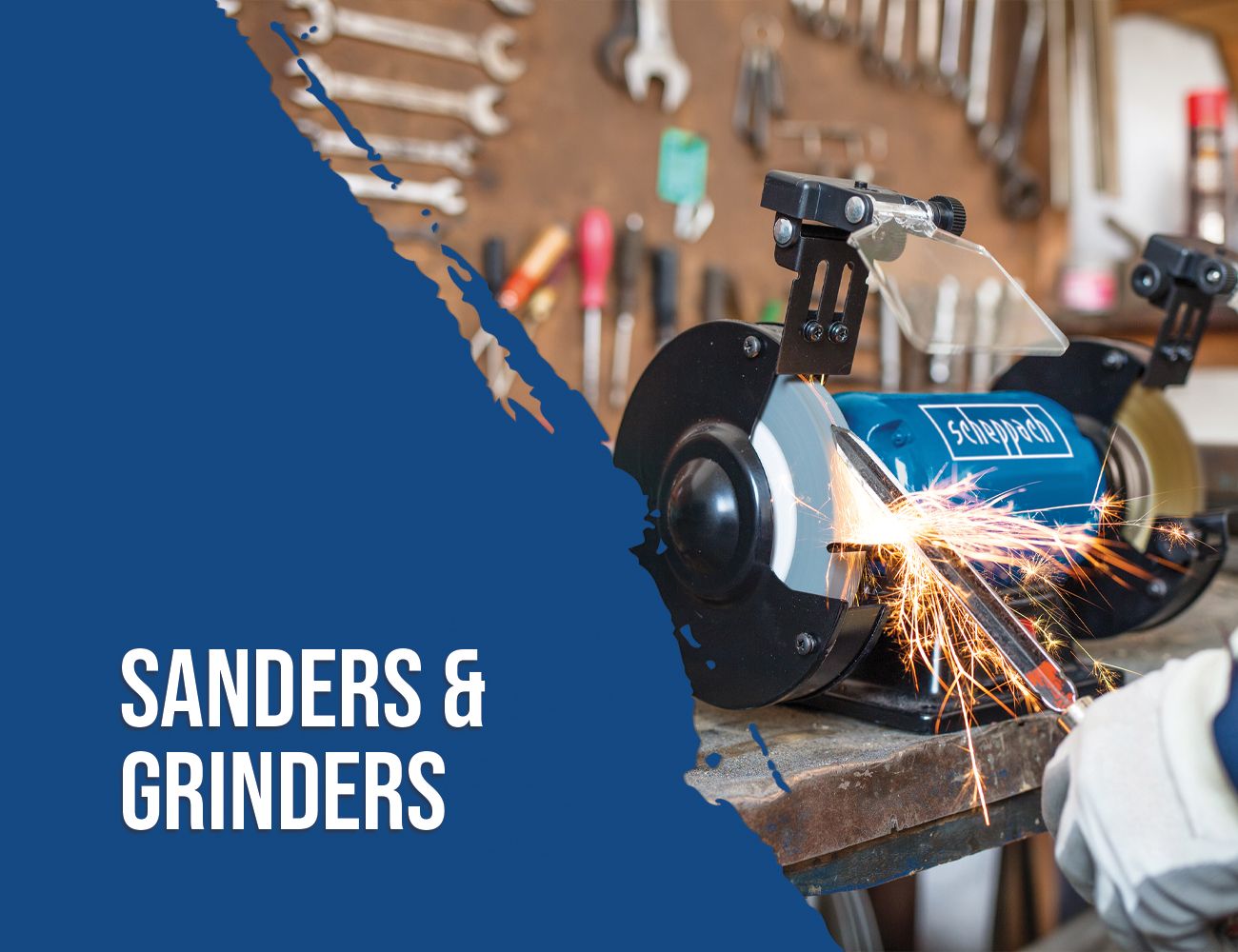
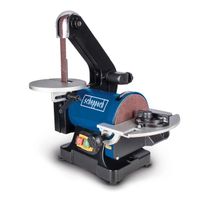
£99.00
£119.00
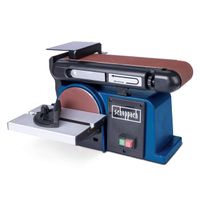
£139.00
£169.00
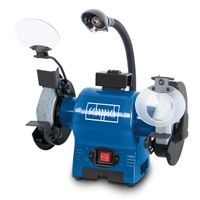
£89.00
£99.00
£119.00
£99.00
£69.00
£119.00
£79.00
£99.00
£219.00
£249.00
£149.00
£179.00
£99.00
£119.00
£139.00
£169.00
£119.00
£149.00
£179.00
Sanders & Grinders
Whether you're preparing timber for finishing, shaping components, restoring cutting edges or sharpening workshop tools, the right sanding or grinding machine can make every project easier and more precise. From furniture making and joinery to general workshop maintenance, sanders and grinders help improve accuracy, surface quality and overall efficiency across a wide range of applications.
Scheppach offers a comprehensive range of Belt & Disc Sanders, Double Grinders, Spindle Sanders, Universal Drum Sanders and Whetstone Grinders, providing practical solutions for DIY enthusiasts, home workshops and professional users alike. Developed using German engineering principles, the range is designed to deliver dependable performance across woodworking, metalworking and tool maintenance applications. Backed by dedicated UK after-sales support and genuine spare parts availability, Scheppach equipment is designed to provide long-term reliability and ownership confidence.
This guide explains the different types of sanders and grinders available, their ideal applications and the key considerations when choosing the right machine for your workshop.
Choosing the Right Sander or Grinder
Choosing the right machine starts with understanding the type of work you carry out most frequently. If your projects involve smoothing timber, shaping edges or preparing surfaces before finishing, a sander will usually be the best choice. Different sanding machines are designed to tackle different tasks, from large flat panels to intricate curved profiles.
If your focus is sharpening workshop tools, removing burrs or shaping metal components, a grinder offers the durability and precision required for regular maintenance work. Whether restoring chisels, sharpening drill bits or maintaining knives and cutting tools, choosing the correct grinder helps keep equipment performing at its best.
For users who regularly complete a variety of workshop projects, combining different machine types can significantly increase versatility. A belt and disc sander may be ideal for shaping timber, while a whetstone grinder provides precision sharpening for cutting tools. Selecting equipment that complements your workshop activities helps improve productivity while delivering consistently high-quality results.
Workshop size should also be considered. Compact benchtop machines are ideal where space is limited, while larger models provide greater working capacity for more demanding projects.
Understanding the Different Types of Sanders and Grinders
Each type of sanding and grinding machine is designed for specific workshop applications, making it important to understand their individual strengths before choosing the right equipment.
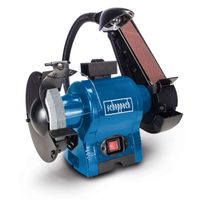
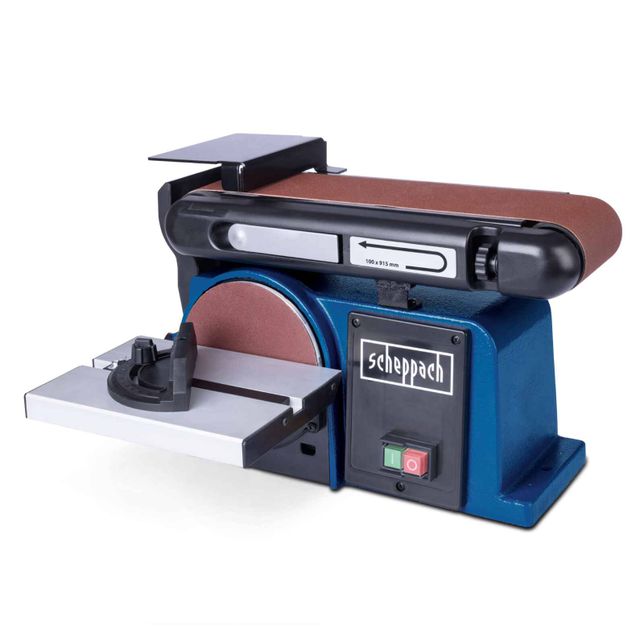
Belt & Disc Sanders combine two sanding methods in a single machine, making them suitable for smoothing flat surfaces, shaping timber and refining edges. The belt is ideal for rapid material removal, while the disc allows greater control when finishing smaller workpieces and angled edges.
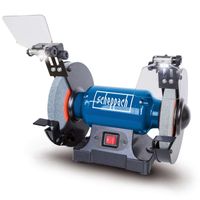
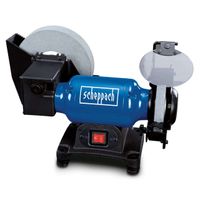
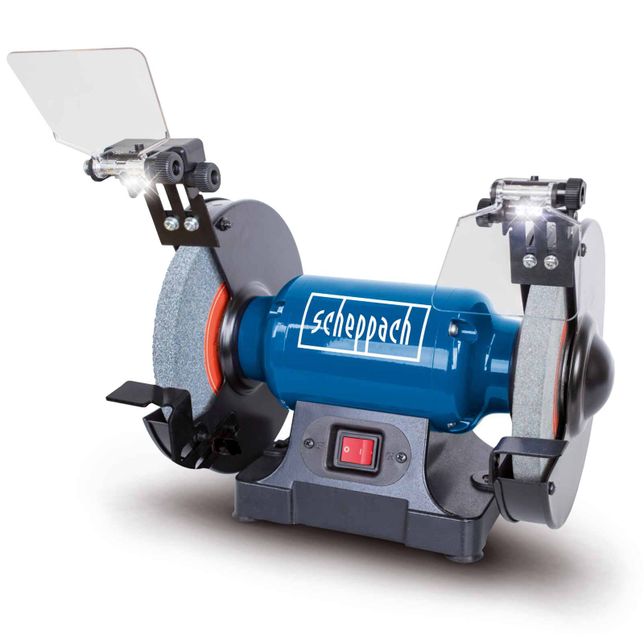
Double Grinders are commonly used for sharpening workshop tools, removing burrs and carrying out general grinding tasks. They provide an efficient way to restore cutting edges and prepare metal components, making them a valuable addition to both woodworking and engineering workshops.
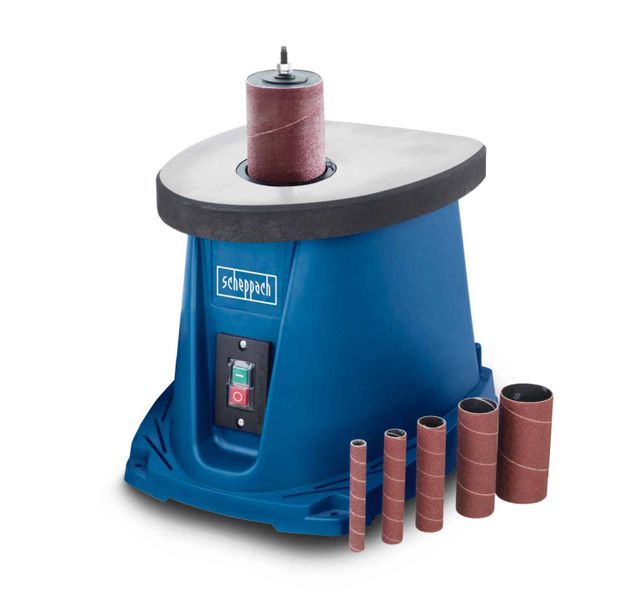
Spindle Sanders are specifically designed for sanding curved workpieces, internal cut-outs and detailed profiles. Their oscillating spindle action helps produce an even finish while reducing excessive wear on the abrasive, making them particularly useful for furniture making and intricate woodworking.
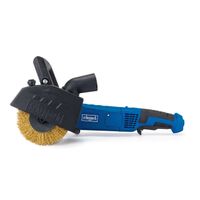
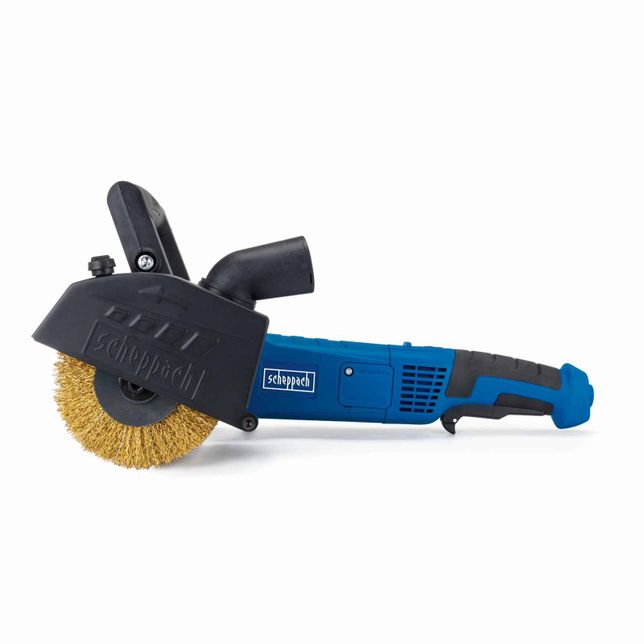
Universal Drum Sanders provide an effective solution for sanding larger timber surfaces to a consistent thickness. They are well suited to users producing furniture, cabinetry or other projects where achieving an even surface finish is essential.
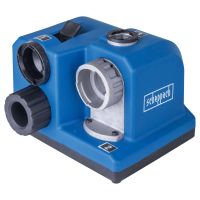
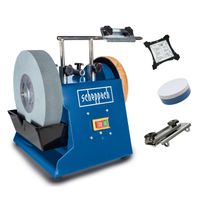
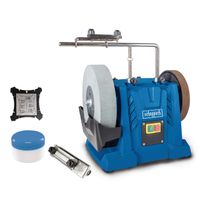
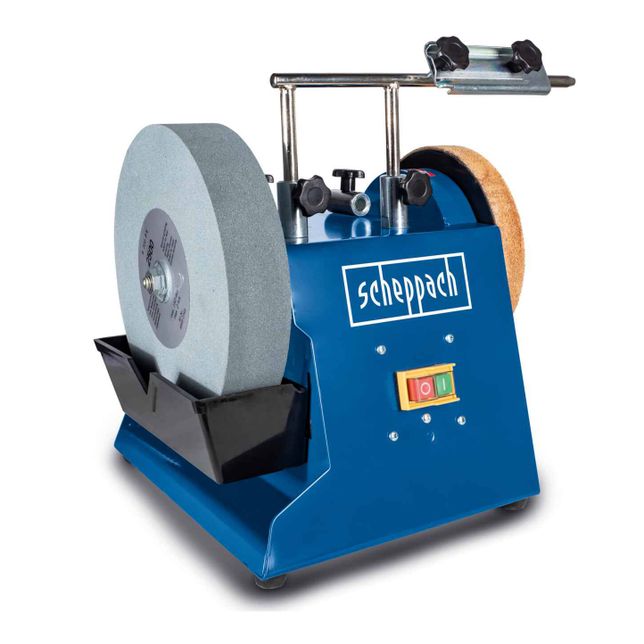
Whetstone Grinders use a slower sharpening process with water-cooled grinding wheels to minimise heat build-up during sharpening. This helps preserve the hardness of cutting tools while producing exceptionally sharp edges on chisels, plane irons, knives and other precision tools.
Understanding these machine types makes it easier to select equipment that matches both your current workshop needs and future projects.
Selecting the Right Abrasive
The abrasive used on your machine has a significant influence on both material removal and surface finish.
Coarse abrasives remove material quickly and are ideal for shaping timber, removing imperfections and restoring worn surfaces. Medium abrasives provide a balance between stock removal and finish quality, while finer abrasives produce smooth surfaces ready for painting, staining or varnishing.
Grinding wheels are available for different sharpening and grinding applications, allowing users to restore cutting edges while maintaining control throughout the sharpening process. Choosing the correct abrasive for both the material and the task helps achieve better results while extending the life of both the abrasive and the machine.
Replacing worn sanding belts, discs, sleeves and grinding wheels as needed helps maintain efficient performance and consistent workshop results.
Improving Accuracy and Finish Quality
Achieving professional-looking results depends on more than simply removing material. Using the correct sanding or grinding machine allows you to work with greater precision, maintain accurate dimensions and produce cleaner finishes across a wide variety of projects.
Good workshop practices, including selecting the appropriate abrasive, allowing the machine to do the work and carrying out routine maintenance, all contribute to improved results and consistent long-term performance.
Whether you're building furniture, restoring hand tools or completing everyday DIY projects, investing in the right sanding and grinding equipment helps improve efficiency while producing high-quality finishes time after time.
Scheppach Product Range
Scheppach's range of sanders and grinders is designed to support every stage of material preparation, finishing and tool maintenance. From smoothing timber and refining profiles to sharpening workshop tools and achieving consistent surface finishes, the range provides practical solutions for DIY enthusiasts, home workshops and professional users.
The BG150 , SM200L and BG200W Double Grinders are ideal for sharpening chisels, plane irons, drill bits and other workshop tools, as well as removing burrs and carrying out general grinding tasks. Their durable benchtop designs make them valuable additions to any workshop where keeping cutting tools in top condition is essential.
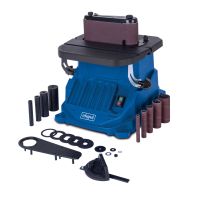
For shaping and finishing timber, the BGS700, BTS700 and BTS800 Belt & Disc Sanders combine two sanding methods in one machine, making them well suited to smoothing flat surfaces, refining edges and preparing workpieces before painting, staining or assembly. Their versatility makes them popular choices for furniture making, joinery and general woodworking.
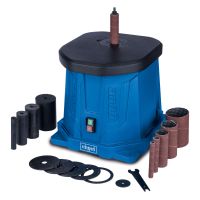
The OSM100 and OSM600 Spindle Sanders are designed to produce smooth finishes on curved workpieces, internal cut-outs and detailed profiles. Their oscillating action helps deliver an even finish while reducing abrasive wear, making them ideal for intricate woodworking projects.
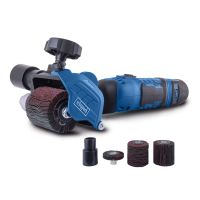
The MRS500 and MRS1300 Universal Drum Sanders provide an effective solution for producing smooth, consistent timber surfaces across larger workpieces. They are great for furniture making, cabinetry and woodworking projects where achieving an even thickness and high-quality finish is important.
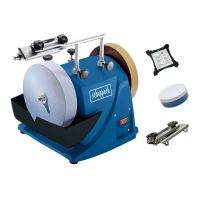
For precision sharpening, the TIGER 2000S, TIGER 2500 and TIGER 7000S Whetstone Grinders offer controlled, water-cooled sharpening for chisels, knives, plane blades and other cutting tools. Their slower sharpening process helps minimise heat build-up, allowing you to restore exceptionally sharp edges while helping preserve the hardness of the steel.
From shaping and finishing timber to restoring precision cutting tools, Scheppach's sanding and grinding range provides long-term reliability, supported by genuine spare parts and dedicated UK after-sales service whenever assistance is required.
Accessories & Maintenance
Routine maintenance helps keep your sanding and grinding equipment operating efficiently while maintaining consistent results across every project.
Sanding belts, discs, sleeves and grinding wheels should be inspected regularly and replaced once they become worn. Fresh abrasives provide more efficient material removal, improve surface finish quality and reduce unnecessary strain on the machine.
Dust, wood waste and grinding debris should be cleaned from the machine after each use to help maintain effective cooling and reliable operation. Keeping work surfaces and ventilation openings clear also supports long-term performance.
Grinding wheels should be checked for wear or damage before use, while sanding belts and discs should remain correctly aligned and securely fitted. Following the maintenance guidance in the user manual helps ensure safe operation and reliable workshop performance.
When replacement components are required, Scheppach genuine spare parts are available to help maintain compatibility, performance and long-term reliability throughout the life of your equipment.
Frequently Asked Questions
What is the difference between a belt and disc sander and a spindle sander?
A belt and disc sander is primarily used for sanding flat surfaces, straight edges and shaping timber, while a spindle sander is designed for smoothing curves, internal cut-outs and detailed profiles. Choosing the right machine depends on the type of workpieces you produce most frequently.
Which grinder is best for sharpening workshop tools?
Double grinders are ideal for general sharpening and grinding tasks, while whetstone grinders provide slower, water-cooled sharpening that helps produce finely honed cutting edges for chisels, plane irons, knives and other precision tools.
What is a universal drum sander used for?
A universal drum sander is designed to produce smooth, even surfaces across larger timber workpieces. It is particularly useful for furniture making, cabinetry and projects where maintaining consistent thickness and achieving a high-quality finish are important.
How often should sanding abrasives and grinding wheels be replaced?
They should be replaced whenever they become worn or no longer remove material effectively. Using fresh abrasives helps maintain efficient performance, improves finish quality and reduces unnecessary wear on both the machine and the workpiece.
How do I maintain my sander or grinder?
Regular maintenance includes cleaning away dust and debris, checking abrasives for wear, inspecting grinding wheels before use and following the servicing guidance in the user manual. Routine care helps ensure lasting performance and extends the working life of your equipment.
Making the Right Choice
Selecting the right sanding or grinding machine depends on the materials you work with, the finish you want to achieve and the type of projects you complete most often. Understanding the purpose of each machine allows you to equip your workshop with the right tools for shaping, finishing and sharpening.
Whether you choose a Double Grinder, Belt & Disc Sander, Spindle Sander, Universal Drum Sander or Whetstone Grinder, Scheppach offers dependable workshop equipment designed to support a wide variety of woodworking and maintenance applications. With genuine spare parts and dedicated UK after-sales support available, you can continue working with confidence as your projects and workshop grow.