
£169.00
£199.00
£199.00
£299.00
£349.00
£79.00
£47.00

£139.00
£119.00
£139.00
£149.00
£169.00
£289.00
£349.00
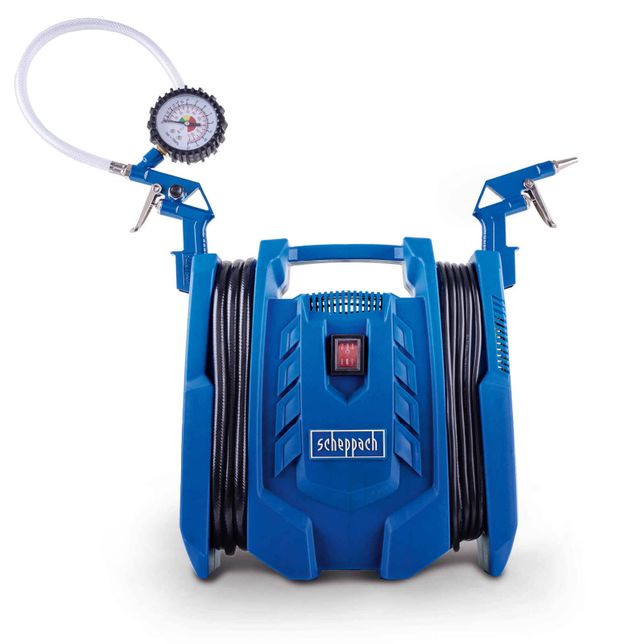
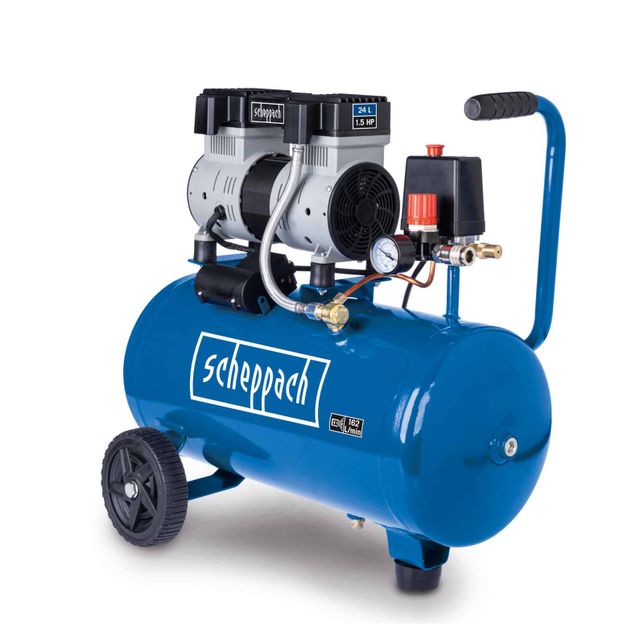
Air Compressors
Air compressors have become an essential addition to many garages, workshops and home DIY spaces, offering a practical way to power pneumatic tools, inflate tyres and sports equipment, and tackle a wide range of maintenance tasks. Whether you're carrying out occasional jobs around the house or using air tools regularly in a workshop, choosing the right compressor can make projects quicker, easier and more efficient.
Scheppach offers a range of air compressors designed to suit different applications, from compact portable models for everyday household tasks to larger workshop compressors capable of supporting more demanding equipment. Developed using German engineering principles and supported by UK-based after-sales service, the range is designed to provide dependable performance, straightforward operation and reliable long-term ownership.
This guide explains the key factors to consider when choosing an air compressor, helping you understand which features matter most and which type is best suited to your projects.
Choosing the Right Air Compressor
Before choosing an air compressor, it's worth thinking about how you plan to use it. The right model for inflating car tyres or footballs is unlikely to be the best choice if you're planning to spray paint furniture or regularly use impact wrenches in your workshop.
One of the biggest mistakes people make is choosing a compressor based solely on maximum pressure. While pressure is important, the amount of air the compressor can deliver over time is often a more significant factor, particularly when using air-powered tools continuously.
If your projects mainly involve inflating tyres, bicycles, air mattresses or garden equipment, a compact portable compressor may provide everything you need while remaining easy to store and transport.
For more regular DIY projects, such as operating nail guns, staplers or small workshop tools, a larger tank capacity can help maintain a more consistent air supply and reduce how frequently the motor needs to restart.
If you're planning to spend long periods using air tools in a garage or workshop, investing in a larger compressor with greater air storage capacity can provide a more comfortable working experience by delivering a steadier supply of compressed air during extended use.
Choosing a model that matches your current needs while leaving some capacity for future projects can often prove better value than replacing a compressor later as your workshop grows.
Understanding Air Pressure and Airflow
When comparing air compressors, you'll often see two important specifications discussed: air pressure and airflow. Understanding the difference between them makes it much easier to choose the right machine.
Air pressure, usually measured in bar or PSI (pounds per square inch), indicates how much pressure the compressor can generate. Many DIY applications such as inflating vehicle tyres, bicycle tyres, footballs and inflatable toys require relatively modest amounts of compressed air but still need suitable pressure.
Airflow refers to the volume of compressed air the compressor can deliver over a period of time. This becomes particularly important when using pneumatic tools that consume air continuously, such as spray guns or grinders. Even if two compressors produce similar pressure, the model capable of delivering more airflow may be better suited to longer or more demanding applications.
If you're only carrying out occasional inflation jobs, maximum airflow may not be your highest priority. However, if you're building a home workshop or planning to expand the range of air tools you use, considering airflow alongside pressure will help you choose a compressor that continues to meet your needs over time.
Choosing the Right Tank Size
Tank capacity plays a significant role in how an air compressor performs during different types of work. The compressed air stored inside the tank acts as a reserve, allowing tools to operate before the motor needs to run again.
Smaller tanks are often easier to carry, require less storage space and are well suited to occasional household tasks. If you're moving around the garage, working outdoors or transporting your compressor between locations, portability can be a major advantage.
Larger tanks generally provide longer operating periods before pressure drops, making them particularly useful when using air tools that require a continuous supply of compressed air. This can help reduce interruptions during projects such as spray painting, workshop assembly work or extended DIY tasks.
It's important to remember that a larger tank doesn't necessarily mean the compressor produces more air. Instead, it stores a greater volume of compressed air, allowing you to work for longer before the motor needs to restart. Choosing the right balance between portability and capacity depends on how and where you'll be using the compressor most often.
Portable or Workshop Air Compressor?
The environment where you'll use your compressor should also influence your decision.
Portable compressors are ideal if your projects regularly take you around the home, into the garden or between different locations. They're commonly chosen for inflating tyres, cleaning equipment using compressed air, powering smaller pneumatic tools and carrying out routine maintenance jobs. Their compact size also makes storage easier if space is limited.
Larger workshop compressors are generally better suited to garages, workshops and dedicated workspaces where the machine remains in one location. Their increased air storage makes them more comfortable to use during longer projects and supports a wider variety of pneumatic tools that require a consistent supply of compressed air.
If you're building a workshop that will continue to expand over time, it can be worth considering a compressor that offers enough capacity to support future equipment rather than simply meeting today's requirements.
Features That Make Everyday Jobs Easier
Modern air compressors are designed to do far more than simply generate compressed air. Depending on the model, you'll find features that improve convenience, reduce maintenance and make everyday operation more straightforward.
If you plan to move your compressor around regularly, features such as transport wheels, carrying handles and compact designs can make lifting and positioning much easier. This is particularly useful if you're working in different parts of your property or transporting the compressor between home and workshop.
Noise is another consideration that many buyers overlook. If your compressor will be used in an attached garage, home workshop or shared workspace, quieter operation can make longer working sessions more comfortable. Low-noise compressors are often preferred where reducing disturbance is important without compromising everyday performance.
Some compressors are supplied with accessories such as air hoses, inflation nozzles and connector kits. Choosing a package that includes these items can help you get started more quickly without needing to purchase additional equipment separately.
It's also worth considering how the compressor controls are laid out. Clearly positioned pressure gauges, accessible controls and straightforward operation all contribute to a better user experience, particularly if you're new to using compressed air equipment.
The Scheppach Air Compressor Range
Scheppach offers a broad range of air compressors designed to suit everything from occasional home maintenance to more demanding workshop applications.
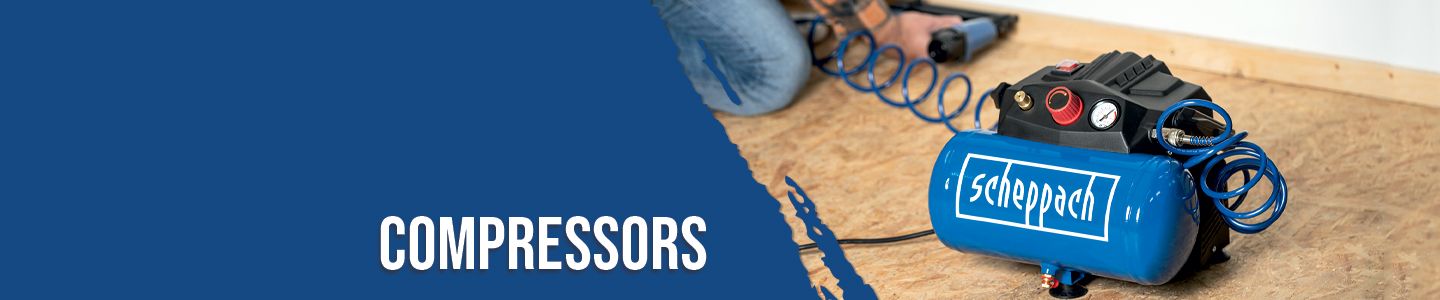
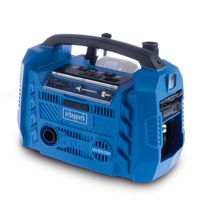
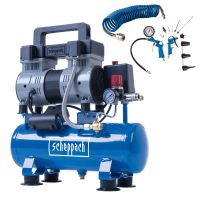
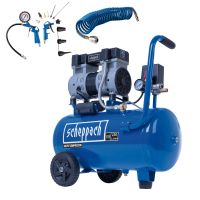
For portable everyday tasks, models such as the Airforce 7, HC06 + Hose and HC06 + 6pc Accessories 8m Hose provide practical solutions for inflating tyres, bicycles, sports equipment and other household inflatables. Their compact designs make them easy to store and transport, making them suitable for garages, sheds or keeping in the car.
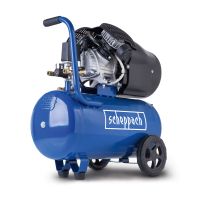
If you're looking for a quieter compressor for regular DIY projects or home workshop use, models such as the HC08Si, HC26Si and HC51Si provide additional options that can suit a wider variety of pneumatic applications while maintaining comfortable operation.
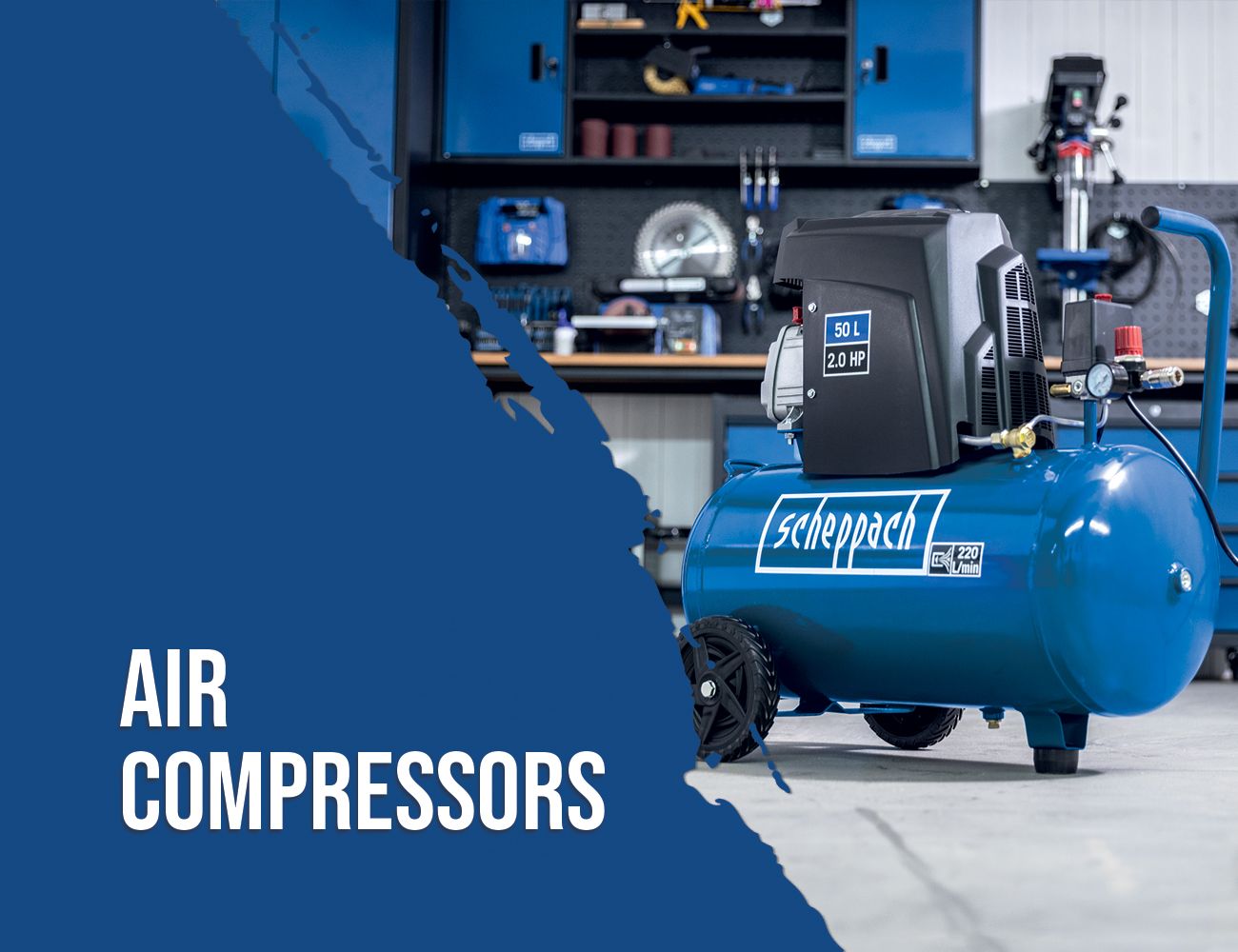
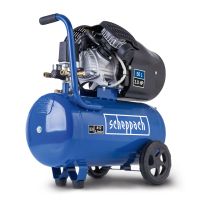
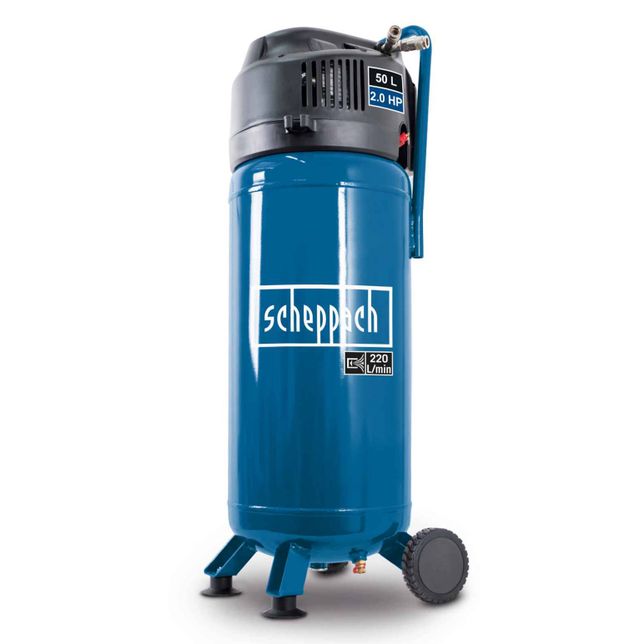
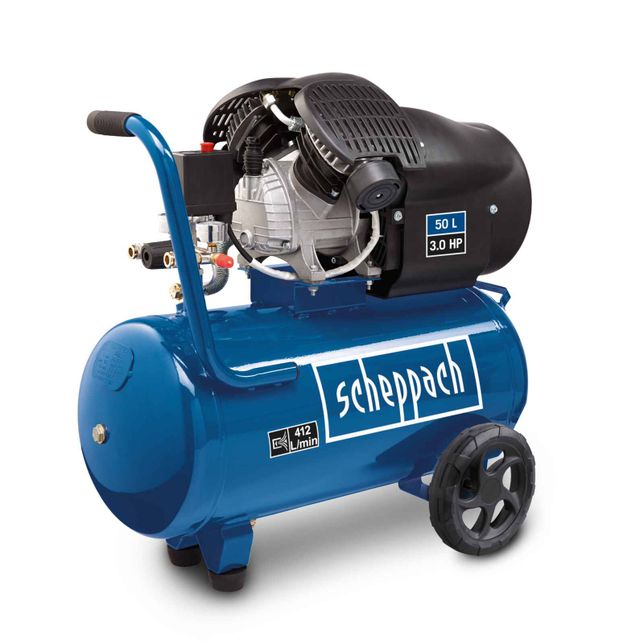
As workshop demands increase, larger compressors including the HC30ox, HC51V, HC51V + 13pc Accessories 10m Hose, HC52DC and HC53DC offer solutions for users who require greater air storage and longer operating periods. These models are well suited to more regular use with pneumatic tools and larger workshop projects.
Having a range of compressor sizes means you can choose equipment that matches the type of work you carry out today while allowing room for future projects as your workshop develops.
Accessories & Maintenance
Looking after your air compressor helps maintain reliable performance and can extend its working life.
One of the simplest maintenance tasks is draining condensation from the air receiver after use. Moisture naturally forms inside the tank as compressed air cools, particularly in colder or damp conditions. Removing this moisture helps protect internal components and supports reliable operation over time.
Keeping the compressor clean and ensuring ventilation openings remain unobstructed also helps maintain efficient cooling during operation. Before storing the compressor for longer periods, it's good practice to disconnect hoses, release remaining air pressure where appropriate and keep the machine in a clean, dry environment.
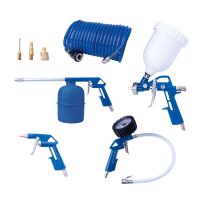
Accessories can also improve the versatility of your compressor. Air hoses of different lengths make it easier to reach around vehicles or workshops, while inflation adaptors allow you to inflate tyres, sports equipment and inflatable products. Quick-connect fittings can speed up tool changes, particularly if you regularly switch between different pneumatic tools.
Routine servicing may involve replacing consumable components where required. Genuine spare parts help maintain compatibility and reliable operation, while Scheppach's UK after-sales support provides assistance if replacement parts or servicing advice are needed.
Frequently Asked Questions
What size air compressor do I need?
The right size depends on the jobs you plan to carry out. If you're mainly inflating tyres, bicycles or sports equipment, a compact portable compressor is often sufficient. For regular DIY work using nail guns or staplers, a larger tank can provide a steadier supply of compressed air. If you're planning to use air tools for extended periods in a workshop, choosing a compressor with greater air storage can improve efficiency and reduce interruptions during longer projects.
Which air compressor is best for a home workshop?
For a home workshop, it's worth considering how often you'll use pneumatic tools and which tools you intend to operate. Occasional DIY projects may only require a compact compressor, while regular woodworking, vehicle maintenance or decorating projects often benefit from a larger model that stores more compressed air. Selecting a compressor with capacity that suits both your current and future projects can provide greater flexibility over time.
Is an oil-free air compressor better than an oil-lubricated model?
Neither option is automatically better, as each suits different applications. Oil-free compressors generally require less routine maintenance and are popular for occasional DIY use and inflation tasks. Oil-lubricated compressors are often chosen for more demanding workshop environments where longer operating periods may be required. The right choice depends on how frequently you'll use the compressor and the type of work you expect it to perform.
Can one air compressor power different air tools?
Yes, provided the compressor can supply the air requirements of each tool. Many compressors can be used with nail guns, staplers, tyre inflators and other pneumatic equipment. Some tools consume more compressed air than others, so it's important to consider both pressure and airflow when selecting a compressor. Matching the compressor to the intended application helps achieve reliable and consistent performance.
How much air pressure do I need for DIY jobs?
Many common DIY tasks require relatively modest air pressure, although the exact requirement depends on the equipment being used. Inflating tyres, sports equipment and airbeds typically requires different pressures, while pneumatic tools are designed to operate within specific pressure ranges recommended by the manufacturer. Following the guidance supplied with both the compressor and the tool helps ensure safe operation and reliable results.
Making the Right Choice
Choosing the right air compressor starts with understanding the type of projects you want to complete. Considering factors such as portability, tank capacity, pressure requirements and intended applications will help you select equipment that supports both your current needs and future projects.
Scheppach's range of air compressors has been developed to provide dependable performance across a wide variety of home, garage and workshop applications. Supported by UK after-sales service and genuine spare parts availability, the range offers practical solutions designed to help you complete everyday projects with confidence.