

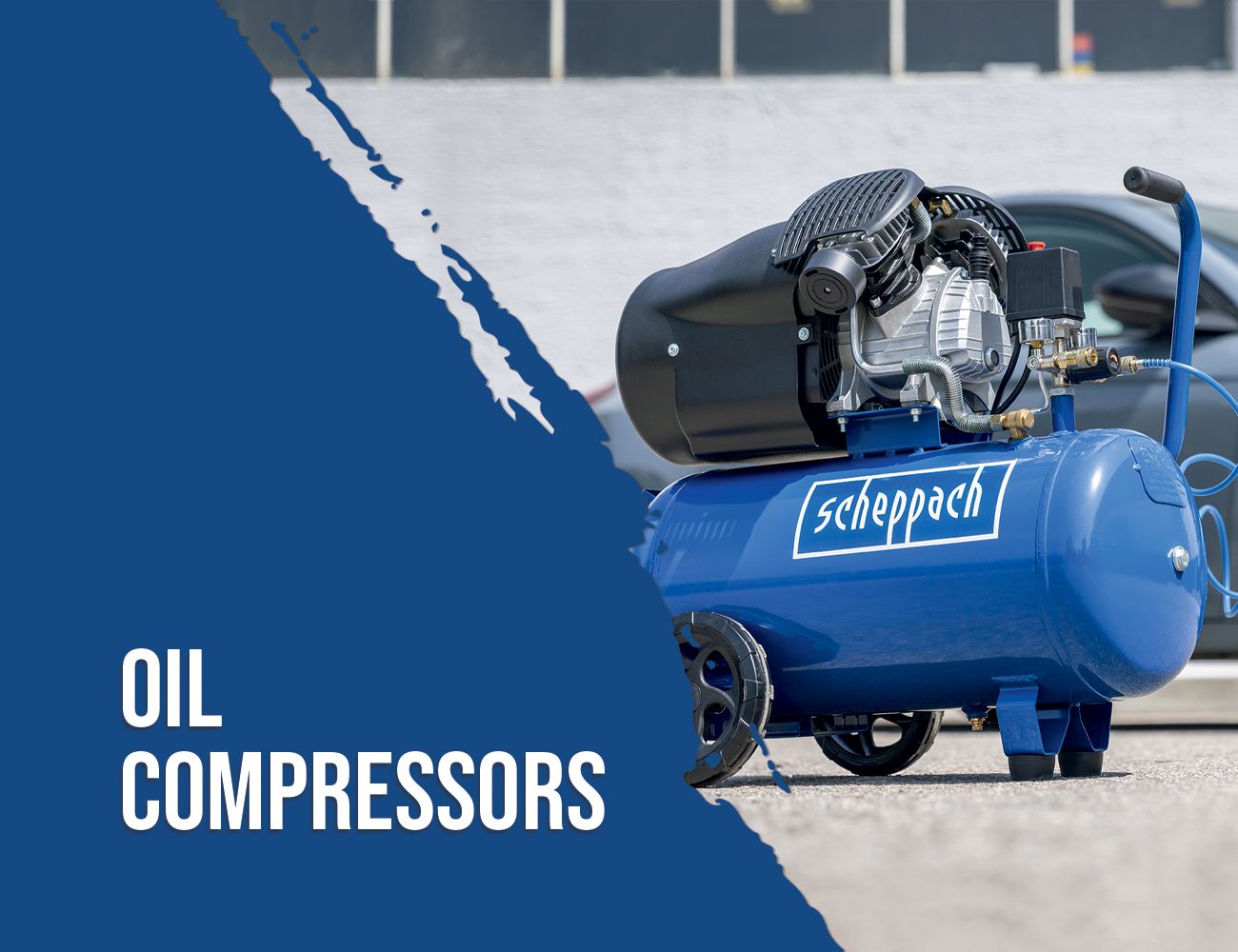
Oil Compressors
If you're looking for an air compressor that can handle regular workshop use and more demanding pneumatic applications, an oil compressor is worth considering. Designed to deliver dependable performance over longer working periods, oil-lubricated compressors are commonly chosen for garages, workshops and maintenance environments where compressed air is used more frequently.
Scheppach offers an oil compressor designed to provide reliable operation for a wide range of DIY and workshop projects. Developed using German engineering principles, the range focuses on practical design, straightforward maintenance and long-term durability, while being supported by UK-based after-sales service and genuine spare parts availability.
This guide explains how oil compressors work, how they differ from oil-free compressors and the key factors to consider when choosing the right compressor for your projects.
Choosing the Right Oil Compressor
Before choosing an oil compressor, it's important to think about the type of work you'll be carrying out and how often you'll be using compressed air. While occasional inflation jobs can often be completed using smaller portable compressors, regular workshop tasks usually benefit from an oil-lubricated model designed for longer operating periods.
If you expect to use air tools such as impact wrenches, ratchets, spray guns or other pneumatic equipment on a regular basis, an oil compressor can provide the consistent performance needed for these more demanding applications.
Another consideration is where the compressor will be located. If it will remain in a garage or dedicated workshop, a larger stationary compressor may provide greater convenience than a compact portable model, particularly when carrying out longer projects that require a continuous supply of compressed air.
Choosing a compressor that matches both your current requirements and any future workshop plans can help ensure it continues to meet your needs as your projects become more ambitious.
Why Choose an Oil Compressor?
Oil compressors use lubricating oil within the pump mechanism to reduce friction between moving components during operation. This lubrication helps minimise wear and supports reliable performance during extended use.
If you regularly use compressed air throughout the week, an oil-lubricated compressor can be a practical choice for maintaining dependable operation over time. They are commonly found in garages, workshops and environments where pneumatic tools are used more frequently than occasional DIY tasks.
One of the advantages of oil lubrication is its ability to help protect internal components during continuous operation. This makes oil compressors particularly well suited to users who require reliable compressed air for larger projects or longer working sessions.
It's worth remembering that oil compressors require routine maintenance to ensure they continue operating efficiently. Checking oil levels, replacing oil at the recommended intervals and following the manufacturer's maintenance guidance all contribute to long-term reliability.
Understanding Air Pressure, Airflow and Tank Capacity
When comparing oil compressors, you'll often come across specifications relating to air pressure, airflow and tank capacity. Each plays an important role in determining how the compressor performs.
Air pressure, usually measured in bar or PSI, indicates the pressure the compressor can generate. Different pneumatic tools are designed to operate within specific pressure ranges, so selecting a compressor that meets those requirements is essential.
Airflow describes the volume of compressed air the compressor can deliver over time. For tools that operate continuously, airflow is often just as important as pressure because it determines whether the compressor can maintain a consistent supply of compressed air during longer periods of use.
Tank capacity affects how much compressed air can be stored before the motor needs to restart. A larger air receiver allows you to work for longer between motor cycles, helping maintain a more consistent workflow during extended projects. It's important to remember that increasing tank size does not increase the amount of air the compressor produces. Instead, it provides a larger reserve of compressed air that can be used before the pump needs to replenish the tank.
Features That Support Workshop Performance
If you're investing in an oil compressor for regular use, it's worth looking beyond the basic specifications and considering the features that improve everyday operation.
Clear pressure gauges make it easier to monitor both tank and outlet pressure, allowing you to adjust settings to suit different pneumatic tools. Accessible controls also help simplify operation, particularly when switching between different applications throughout the day.
Stable construction and transport features such as wheels and handles can make positioning a larger compressor easier within the workshop, even if it normally remains in one location.
Routine maintenance is another important consideration. Easy access to service points helps simplify regular inspections, while following the recommended maintenance schedule supports dependable long-term performance.
Scheppach Product Range
The Scheppach HC52DC oil compressor is designed for users who need dependable compressed air for regular workshop, garage and site-based applications. It is well suited to projects where a consistent air supply is important, making it a practical choice for DIY enthusiasts, hobbyists and workshop users who regularly work with pneumatic tools.
An oil-lubricated compressor like the HC52DC is particularly suited to longer working sessions where durability and consistent performance are priorities. Whether you're carrying out vehicle maintenance, using air-powered tools or completing workshop projects, it provides the reliable operation expected from an oil compressor designed for regular use.
Choosing an oil compressor also means investing in equipment that's designed with long-term ownership in mind. Supported by UK after-sales service and genuine spare parts availability, the HC52DC offers a practical solution for anyone looking to equip their workshop with dependable compressed air equipment.
Accessories & Maintenance
Routine maintenance plays an important role in keeping an oil compressor operating efficiently and extending its working life.
One of the most important maintenance tasks is checking the compressor oil regularly and replacing it at the intervals recommended in the user manual. Clean oil helps lubricate internal moving components, reducing wear and supporting reliable long-term performance.
It's equally important to drain condensation from the air receiver after use. Moisture naturally develops inside the tank as compressed air cools, particularly in colder weather or humid conditions. Removing this moisture helps protect the tank and internal components from unnecessary corrosion.
Keeping the compressor clean and ensuring cooling vents remain free from dust also helps maintain efficient operation. Before storing the compressor, disconnect any attached air hoses, safely release any remaining pressure where appropriate and keep the machine in a clean, dry environment.
Accessories can further improve the versatility of your compressor. Air hoses, quick-connect fittings and inflation adaptors make it easier to tackle a wider variety of jobs, while appropriate personal protective equipment such as safety glasses and ear defenders should always be worn when operating compressed air equipment.
If servicing or replacement components are required, choosing genuine spare parts helps maintain compatibility and reliable operation throughout the life of the compressor.
Frequently Asked Questions
What is the difference between an oil compressor and an oil-free compressor?
An oil compressor uses lubricating oil inside the pump to reduce friction between moving components during operation. This makes it well suited to regular workshop use and longer running periods. Oil-free compressors require less routine maintenance and are often chosen for lighter DIY tasks or occasional inflation jobs. The right choice depends on how frequently you'll use the compressor and the type of projects you plan to complete.
Which oil compressor is best for a home workshop?
The best oil compressor depends on the tools you intend to use and how often you'll be using compressed air. If your workshop regularly uses pneumatic tools or involves longer working sessions, an oil-lubricated compressor such as the Scheppach HC52DC provides a dependable solution designed for consistent workshop performance and long-term reliability.
How often should I change the oil in an oil compressor?
Oil change intervals vary depending on the compressor model and how frequently it is used. Following the maintenance schedule provided in the user manual helps ensure reliable performance and protects internal components from unnecessary wear. Regularly checking the oil level and condition is also good practice between scheduled services.
Can an oil compressor power different air tools?
Yes, provided the compressor delivers the pressure and airflow required by the tool being used. Many workshop tools, including impact wrenches, ratchets, spray guns and inflators, can be operated from an oil compressor when matched correctly. Checking the air requirements of your chosen tools before purchasing helps ensure suitable performance.
Is an oil compressor suitable for DIY projects?
Yes. While oil compressors are commonly associated with workshops and garages, they are also suitable for DIY enthusiasts who regularly undertake larger home improvement projects or frequently use pneumatic tools. If you're likely to use compressed air more often than occasional inflation jobs, an oil-lubricated compressor can provide dependable performance for a wide range of applications.
Making the Right Choice
Choosing an oil compressor comes down to understanding how you'll use it and selecting a model that matches your workshop requirements. Considering factors such as air pressure, airflow, tank capacity and routine maintenance will help ensure you choose equipment that supports both your current projects and future ambitions.
The Scheppach HC52DC has been developed to provide dependable compressed air for regular workshop applications, combining practical design with reliable operation. Backed by UK after-sales support and genuine spare parts availability, it offers a solution designed to deliver long-term performance for DIY enthusiasts and workshop users alike.