

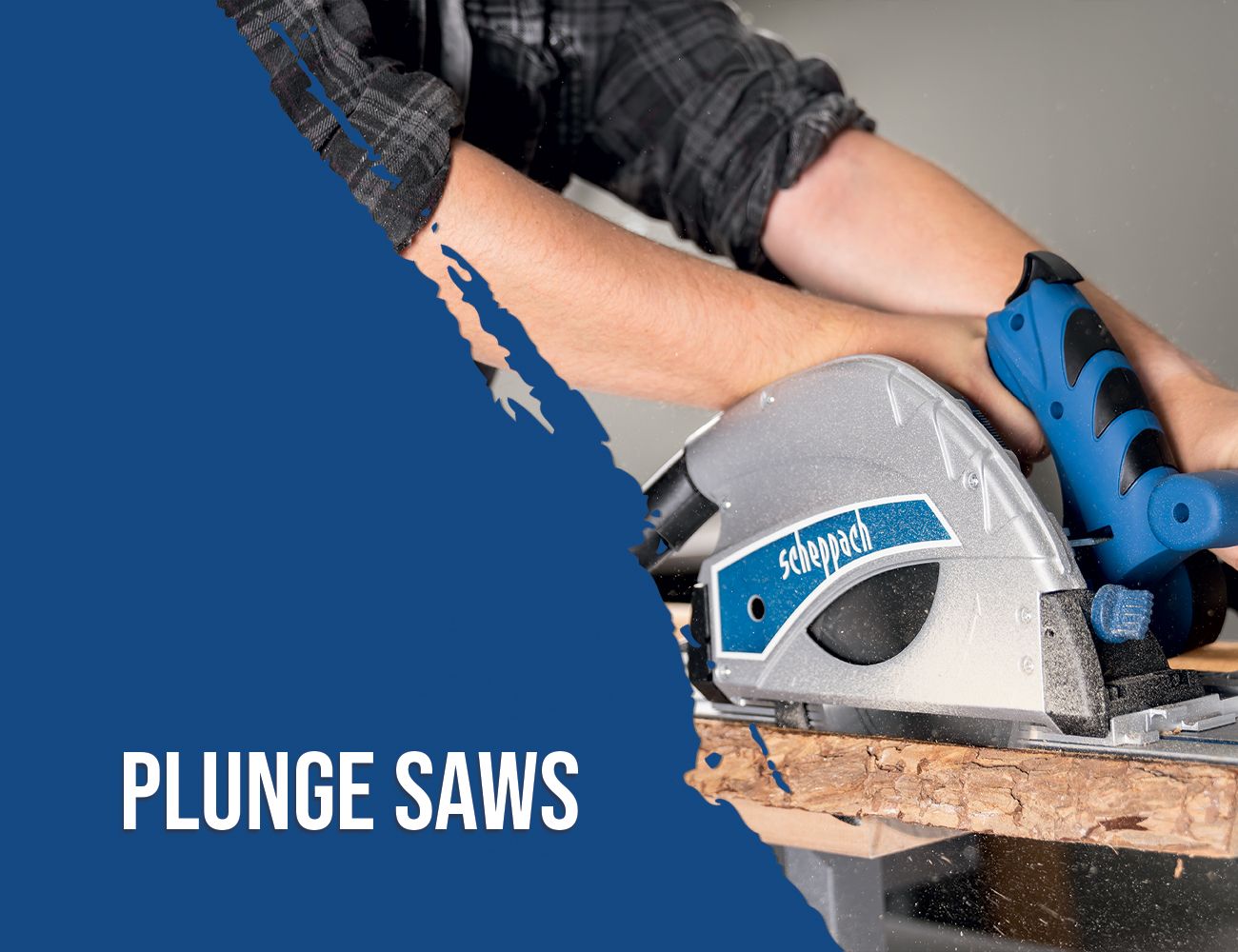
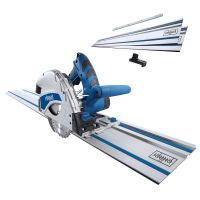
Plunge Saws
Cutting large boards and sheet materials accurately can be challenging, particularly when a clean, straight cutting line is required across a longer workpiece. A plunge saw provides a controlled solution by allowing the blade to be lowered directly into the material, making it suitable for straight cutting as well as applications where the cut needs to begin within the workpiece.
Scheppach's range of plunge saws includes the PL55 and PL75, providing options for DIY enthusiasts, home improvers and woodworkers who need accurate, controlled cutting across suitable boards and sheet materials. Whether sizing panels for furniture, preparing boards for cabinetry or completing general home improvement projects, a plunge saw can provide a practical way to work with larger workpieces.
Drawing on Scheppach's German engineering heritage, the range combines practical design with dependable cutting performance for a variety of projects. Genuine spare parts and UK after-sales support are also available, providing continued assistance with maintenance and long-term machine ownership.
This guide explains what to consider when choosing a plunge saw, how plunge cutting works and how to achieve accurate, controlled cuts across boards and sheet materials.
Choosing the Right Plunge Saw
Choosing a plunge saw should begin with considering the materials you regularly cut, the dimensions and thickness of your workpieces and the cutting capacity required for your projects.
Material compatibility is an important starting point. Consider the types of boards and sheet materials you typically work with and check that they are suitable for the individual machine and blade being used.
Cutting depth is another important consideration. The thickness of the material must fall within the capacity of the machine, so compare the cutting capabilities of individual models with the boards and panels you expect to process most frequently.
Guide compatibility should also be considered where long, accurate straight cuts form a regular part of your projects. A suitable guide system can provide a defined cutting path and may be particularly useful when working across larger panels.
Available working space and frequency of use are further considerations. Think about where larger workpieces will be positioned and supported, as well as how regularly the saw will be used across your woodworking, DIY or home improvement projects.
Comparing these requirements with the capabilities of the PL55 and PL75 can help determine which Scheppach plunge saw is better suited to your typical applications.
Understanding How a Plunge Saw Works
A plunge saw uses a circular blade that can be lowered into the workpiece at the required cutting position.
Before the cut begins, the blade remains within the saw housing. The cutting mechanism is then lowered towards the material, allowing the blade to enter the workpiece in a controlled way. This plunging action gives the tool its name and provides additional flexibility when determining where a suitable cut begins.
Unlike a stationary cutting setup where the workpiece is moved through the cutting area, a plunge saw travels across the supported material. This arrangement can be particularly practical when the workpiece is too large or awkward to manoeuvre easily.
Plunge saws can also be used with compatible guide rails. The guide provides a defined cutting path for the saw to follow, helping maintain consistent movement across the workpiece when producing long, straight cuts.
Together, the plunging action and ability to move the saw across supported material provide a controlled cutting arrangement for a variety of board and sheet-material applications.
Cutting Boards and Sheet Materials
One of the main applications for a plunge saw is accurately cutting larger boards, panels and suitable sheet materials.
Before cutting, the workpiece should be supported securely so that it remains stable throughout the operation. This can be particularly important with larger panels, where inadequate support may make positioning and handling more difficult.
The required cutting line should be measured and established carefully before positioning the saw or compatible guide system. When using a guide rail, accurate placement is important because the guide determines the path followed by the saw.
This approach can be useful when sizing panels or preparing components for furniture, cabinetry and other woodworking or home improvement projects. Rather than having to move the entire panel through a stationary machine, the material can remain supported while the saw travels across it.
The plunging action also allows suitable cuts to begin within the workpiece rather than always starting from an outside edge. This can provide additional flexibility for certain woodworking and fitting applications where an internal starting position is required
Achieving Straight and Accurate Cuts
Accurate plunge cutting depends on careful measurement, stable workpiece support, correct machine setup and controlled movement of the saw.
Before starting, inspect the material and clearly establish the required cutting line. If a guide rail is being used, position it carefully and make sure it remains secure throughout the operation.
Cutting depth should be adjusted appropriately for the material and application according to the instructions for the individual machine. Checking this setting before starting helps ensure the saw is correctly configured for the workpiece being processed.
Allow the blade to reach the appropriate operating speed before progressing through the material, following the operating instructions for the machine. Move the saw steadily along the cutting path rather than forcing it through the workpiece.
Maintaining consistent movement and keeping the saw correctly positioned against the guide, where one is being used, can help preserve the intended cutting line from the beginning of the cut to the end.
Taking time to check measurements, cutting depth and guide positioning before beginning can help produce more accurate and consistent results across longer workpieces.
Scheppach Product Range
Scheppach's plunge saw range includes the PL55 and PL75, providing options for users undertaking woodworking, DIY and home improvement projects involving boards, panels and other suitable sheet materials.
The Scheppach PL55 provides an option for DIY enthusiasts, home improvers and woodworkers who need controlled cutting across suitable boards and sheet materials. Its plunge functionality allows the blade to enter the workpiece at the required position, while compatibility with a suitable guide system can support accurate straight cutting across larger workpieces.
This makes the PL55 useful for applications such as sizing panels and preparing components for furniture, cabinetry and general home improvement. When considering the PL55, check its cutting capacity, blade compatibility and available guide options against the materials and workpiece dimensions you typically use.
The Scheppach PL75 provides another plunge saw option for users working with suitable boards, panels and sheet materials. Like the PL55, its plunge cutting arrangement provides flexibility when determining where a suitable cut begins and supports controlled cutting across larger workpieces.
When comparing the PL75 with the PL55, consider the individual specifications and cutting capabilities of each machine against the dimensions and thickness of the materials you regularly process. Cutting capacity, blade compatibility and available guide options can help determine which model provides the most appropriate setup for your projects.
Together, the PL55 and PL75 provide Scheppach users with a choice of plunge saws for different project and cutting requirements
Accessories & Maintenance
Suitable accessories and regular maintenance can help maintain accurate cutting performance and smooth operation from a plunge saw.
A compatible guide rail can be particularly useful for applications involving long, straight cuts. The guide and contact surfaces should be kept clean so that the saw can travel smoothly along the required cutting path.
The saw blade should be selected according to the material and intended application and inspected regularly for wear, damage or reduced cutting performance. A suitable blade in good condition can help produce a cleaner finished edge, while a worn or unsuitable blade may reduce cut quality.
Dust and cutting debris should also be removed regularly from the saw, particularly around the blade housing, guide surfaces and extraction connection. Suitable dust extraction can be used where appropriate to help manage sawdust during woodworking applications.
Before making adjustments, changing the blade or carrying out maintenance, disconnect the machine from its power source and follow the procedures provided in the user manual.
When replacement components are required, genuine Scheppach spare parts can help maintain compatibility with the PL55.
Frequently Asked Questions
What is a plunge saw used for?
A plunge saw is used for producing controlled straight cuts in boards, sheet materials and other suitable workpieces. It is particularly useful for sizing panels and completing woodworking, furniture, cabinetry and home improvement projects.
What is the difference between a plunge saw and a circular saw?
Both use a circular cutting blade, but a plunge saw is designed so the blade can be lowered into the material at the required position. This allows suitable cuts to begin within a workpiece and makes the tool particularly useful for guided straight cutting.
Why use a guide rail with a plunge saw?
A compatible guide rail provides a defined path for the saw to follow. This can make it easier to maintain a straight cutting line across longer workpieces and is particularly useful when sizing boards and sheet materials.
Can a plunge saw start a cut in the middle of a workpiece?
The plunging action allows suitable cuts to begin within a workpiece rather than always starting from an outside edge. The machine should be correctly positioned and operated according to the manufacturer's instructions for the application.
How do I maintain a plunge saw?
Regular maintenance includes removing accumulated sawdust, keeping guide surfaces clean and inspecting the blade for wear or damage. Always follow the cleaning, blade-changing and maintenance instructions provided in the user manual for your specific machine.
Making the Right Choice
Choosing a plunge saw starts with considering the dimensions and thickness of the materials you regularly work with, the cutting capacity required and whether guided straight cutting would benefit your projects.
Scheppach's PL55 and PL75 provide options for DIY, woodworking and home improvement applications involving suitable boards and sheet materials. Comparing the capabilities of each machine with your typical materials and cutting requirements can help determine which model provides the most appropriate setup for your projects.
Careful setup and regular maintenance can help maintain accurate and reliable cutting performance over the long term. Genuine Scheppach spare parts and UK-based after-sales support are also available when required.