

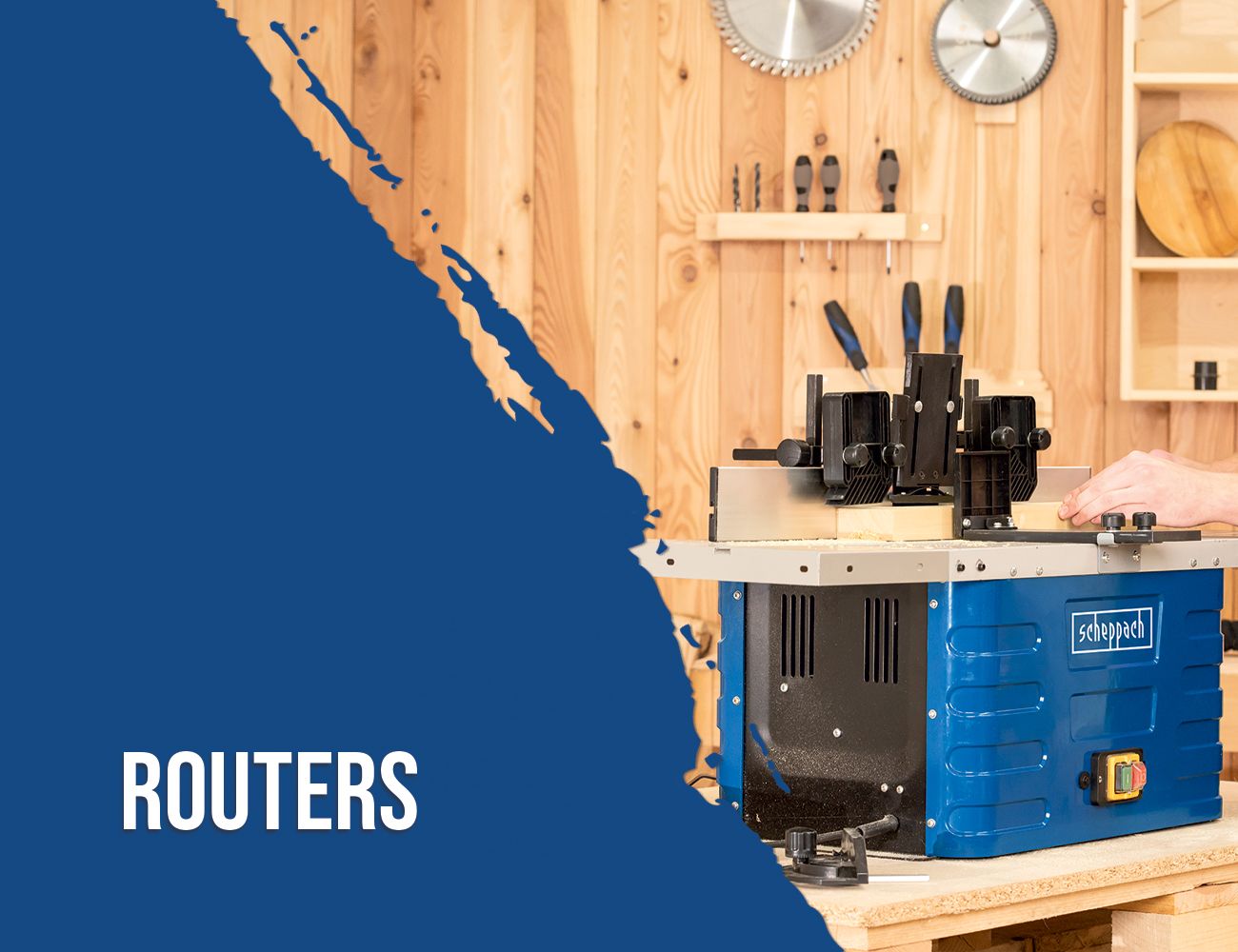
Routers
Creating clean edges, accurate grooves and detailed profiles can make a significant difference to the finish of a woodworking project. A router is a versatile power tool designed for controlled material removal, allowing users to shape, trim and detail timber across a wide variety of applications.
The Scheppach LFR720 router provides a practical solution for DIY enthusiasts, home improvers and woodworkers who want greater control when shaping and finishing timber. From creating decorative edges and cutting grooves to producing recesses and carrying out general routing work, a router can support numerous woodworking tasks with accuracy and flexibility.
Combining practical design with Scheppach's German engineering heritage, the LFR720 is designed to support accurate material removal across a variety of projects. Access to genuine spare parts and UK after-sales support also provides continued reassurance when maintaining your equipment over the long term.
This guide explains what a router is used for, how different router bits affect the finished result and the key considerations for achieving accurate, controlled routing.
What to consider when Choosing a Router
Choosing a router involves considering the type of woodworking you plan to undertake, the materials you regularly work with, and the level of control required for your projects.
Think first about the applications you are likely to encounter. Projects such as furniture making, shelving and cabinetry can involve different types of material removal, so choosing a machine that can be adapted to a range of tasks provides greater flexibility as your project requirements change.
Adjustment and control are also important considerations. Routing often requires material to be removed at a particular depth or position, making accurate setup important for achieving the intended result.
t. A router that can be configured appropriately for the required task can help reduce the need for additional finishing or corrections.
It is also worth considering compatible router bits and accessories. Different bits allow the machine to perform different types of cuts, while suitable guides can provide additional control for applications where accuracy and consistency are particularly important.
For users looking for a practical machine for woodworking and DIY applications, the Scheppach LFR720 provides a flexible routing solution for a variety of projects.
Understanding What a Router Does
A router uses a rapidly rotating cutting bit to remove material from timber and other suitable workpieces. The shape of the fitted bit and the way the router is set up determine the type of cut produced.
One of the most common applications is edge profiling. A suitable router bit can be guided around the edge of a workpiece to create decorative or functional profiles. This can be particularly useful when producing furniture, shelving, cabinetry and other finished timber components.
Routers can also create grooves within the surface of timber. These may be used to accommodate joints, panels or other components, while recesses can be produced where material needs to be removed from a defined area of the workpiece.
Trimming and general shaping provide further applications. Material can be removed from an edge or surface in a controlled manner, allowing the workpiece to be adjusted or finished according to the requirements of the project.
The range of available applications makes a router useful at several stages of a woodworking project, from preparing functional joints and recesses to adding the finishing details to visible edges.
Choosing the Right Router Bit
The router bit has a major influence on the type of cut produced and the finished appearance of the workpiece, so selecting the appropriate bit is an important part of preparing for a routing task.
Straight bits are commonly used for producing grooves, recesses and other straightforward material removal. Profile bits are designed to create shaped or decorative edges, while specialist bits are available for more specific woodworking applications.
When choosing a bit, consider both the material being worked and the result you want to achieve. The dimensions and profile of the bit should correspond with the intended cut, and compatibility with the router should always be checked before use.
The bit should be securely installed according to the manufacturer's instructions before operation begins. Correct fitting and appropriate adjustment help ensure the router is properly configured for the required application.
Building a selection of suitable router bits can also increase the range of work that can be completed with the same machine, allowing the router to be adapted as project requirements change.
Achieving Accurate and Controlled Routing
Good routing results depend on careful preparation, a stable workpiece and controlled movement of the tool.
Before beginning, mark the required cutting area clearly and secure the workpiece appropriately. Preventing the material from moving during operation provides greater control and helps maintain the intended cutting path.
Where appropriate, guides or straight edges can help produce more consistent results, particularly when routing straight grooves or working parallel to the edge of a board. Careful setup before starting the cut can save time and reduce the need for corrections later.
Feed direction and movement should remain steady and controlled throughout the cut. For more demanding routing tasks, removing material progressively rather than attempting a deep cut in a single pass can make the tool easier to control and help achieve a cleaner finish.
Routing can also generate considerable quantities of wood dust and debris. Using suitable extraction where appropriate helps maintain a cleaner working area and improves visibility around the workpiece.
Scheppach Product Range
The Scheppach router range is designed to provide a practical solution for shaping, trimming and detailing timber across woodworking, home improvement and DIY projects.
The Scheppach LFR720 is suitable for users looking for one machine capable of supporting a variety of routing applications. Its adaptable design makes it useful for projects such as furniture making, cabinetry, shelving and general woodworking where controlled material removal is required.
Different router bits can be fitted according to the task, allowing the LFR720 to be configured for the required type of cut. Compatible guides and careful adjustment can provide additional control when working to defined edges, positions or dimensions.
Whether preparing timber components or adding finishing details to a project, the LFR720 provides a practical solution for users who require flexibility from their woodworking equipment.
Genuine Scheppach spare parts and UK-based after-sales support are also available should you need assistance with maintaining your equipment over time.
Accessories & Maintenance
Suitable accessories and regular maintenance can help keep a router performing effectively while supporting accurate results over the long term.
Router bits should be inspected before use for signs of wear, damage or dull cutting edges. Sharp, undamaged bits generally provide cleaner material removal, while worn or damaged components should be replaced when necessary. Always ensure that the selected bit is correctly fitted before operating the machine.
Guides and other compatible routing accessories can provide additional control for particular applications. When producing straight grooves or maintaining a consistent distance from the edge of a workpiece, an appropriate guide can make accurate and repeatable routing easier.
The router itself should be kept clean and free from accumulated wood dust and debris. Particular attention should be given to the area around the cutting bit and ventilation openings, following the cleaning and maintenance guidance provided in the user manual.
Always disconnect the router from its power source before changing bits, making adjustments or carrying out maintenance. When replacement components are required, genuine Scheppach spare parts help ensure compatibility with your machine.
Frequently Asked Questions
What is a router used for in woodworking?
A router is used to remove material in a controlled way to create grooves, recesses, shaped edges and other profiles in timber. Its versatility makes it useful for furniture making, cabinetry, shelving and many other woodworking and DIY projects.
What can I make with a wood router?
A wood router can be used for a wide range of projects, including creating decorative edges, cutting grooves for joints or panels, producing recesses and trimming timber. The applications available depend largely on the router bit and setup being used.
How do I choose the right router bit?
Choose a router bit according to the material being worked and the type of cut or profile required. Straight bits are commonly used for grooves and recesses, while profile bits can be used to shape edges. Always check that the selected bit is compatible with your router and intended application.
Should I make deep router cuts in one pass?
For deeper cuts, several controlled passes are generally preferable to removing a large amount of material at once. Progressive material removal can provide greater control and help achieve a cleaner, more accurate result.
How do I maintain a wood router?
Keep the router clean and remove accumulated wood dust and debris regularly. Router bits should also be inspected for wear or damage and replaced when necessary. Always follow the cleaning, inspection and maintenance instructions provided in the user manual.
Making the Right Choice
A router can be a valuable addition to a woodworking setup, particularly for projects that require controlled material removal and accurate finishing. Choosing the appropriate bit, setting up the workpiece carefully and using suitable guides where required can help achieve consistent results across different applications.
The Scheppach LFR720 provides a practical option for users looking to undertake a variety of routing work with one machine. Its ability to accommodate different routing requirements makes it suitable for woodworking, home improvement and DIY projects ranging from functional timber preparation to more detailed finishing work.
With appropriate accessories and regular maintenance, the LFR720 can provide a flexible solution for a wide variety of projects. Genuine Scheppach spare parts and dedicated UK support are also available to provide reassurance beyond the initial purchase.